NEWS & THESIS

Temple Menorah Returns

세상의 모든 역사 2026. 5. 21. 22:21
반응형

Only Known 2,000-Year-Old Jewish Coin Showing the Temple Menorah Returns to Israel from the U.S.
A rare coin minted in the ancient city of Ashkelon was returned to the State of Israel on May 12, 2026, after a joint investigation by the US authorities and the Israel Antiquities Authority. Credit: Eitan Klein/Israel Antiquities Authority
A tiny bronze coin struck more than 2,000 years ago has returned to Israel after being seized in the United States. On one side, it carries a rare image of the seven-branched menorah from the Jerusalem Temple. On the other, it shows another sacred object: the showbread table. 


The coin was repatriated alongside an exceptionally rare silver tetradrachm linked to ancient Ashkelon. Both were allegedly looted, smuggled out of Israel, and offered for sale through U.S. auction channels before investigators intervened. The Israel Antiquities Authority said the recovery followed cooperation between its Theft Prevention Unit, U.S. Homeland Security, and the Manhattan District Attorney’s Antiquities Trafficking Unit. 
2,000년 된 것으로 알려진 유일한 성전 메노라가 새겨진 유대교 동전, 미국에서 이스라엘로 반환

미국 당국과 이스라엘 유물관리국 공동 조사 끝에 고대 도시 아슈켈론에서 주조된 희귀한 동전이 2026년 5월 12일 이스라엘에 반환되었다. (사진 제공: 에이탄 클라인/이스라엘 유물관리국)

2,000년도 더 전에 주조된 작은 청동 동전이 미국에서 압수된 후 이스라엘로 돌아왔다.

동전 한쪽 면에는 예루살렘 성전의 일곱 가지 메노라가 새겨져 있고, 다른 한쪽 면에는 또 다른 성물인 진설병 상이 묘사되어 있다.

이 동전은 고대 아슈켈론과 관련된 매우 희귀한 은화 테트라드라크마와 함께 반환되었다.

두 동전 모두 약탈되어 이스라엘에서 밀반출된 후 미국 경매를 통해 판매되려던 중 조사관들 개입으로 압수된 것으로 알려졌다.

이스라엘 유물관리국은 이번 회수가 유물 도난 방지 부서, 미국 국토안보부, 맨해튼 지방검찰청 유물 밀매 단속반의 협력으로 이루어졌다고 밝혔다.

하스몬 왕조 말기에 주조된 동전

이 청동 동전은 기원전 40년부터 37년까지 예루살렘을 통치한 하스몬 왕조 마지막 왕 마타티아스 안티고누스 시대에 주조되었다.

그의 짧은 통치 기간은 로마의 지원을 받는 헤롯 왕과의 격렬한 투쟁 속에 진행되었다.

당시의 정치적 상황에서는 이미지가 매우 중요했다.

동전은 단순한 화폐가 아니라, 손에서 손으로 전달되는 공적인 메시지였다.

이것이 바로 이 동전을 특별하게 만드는 이유다.

이 동전은 유대교에서 가장 잘 알려진 신성한 상징 중 하나인 성전 메노라를 묘사한 유일한 고대 유대 동전으로 간주된다.

뒷면에는 예루살렘 성전과 관련된 또 다른 물건인 진설병 상이 묘사된다.

이러한 선택은 우연이 아니었다.

안티고누스는 자신을 왕이자 대제사장으로 내세우고자 했다.

동전에 새긴 문구는 그의 이중적인 정체성을 반영한다.

고대 히브리어로는 "대제사장 마타티아스", 그리스어로는 "안티고누스 왕"이라고 쓰여 있다.

이는 두 대상에게 동시에 분명한 메시지를 전달하려는 의도였다.

유대인 신하들에게는 성전을, 더 넓은 헬레니즘 세계에는 왕권을 상징하는 언어를 사용했다.
A coin struck in the last days of Hasmonean rule

The bronze coin was minted under Mattathias Antigonus, the last Hasmonean king, who ruled Jerusalem from 40 to 37 BCE. His short reign unfolded during a violent struggle with Herod, who had Roman support. In that political climate, imagery mattered. Coins were not only money; they were public messages carried from hand to hand. 

This is what makes the coin extraordinary. It is considered the only known ancient Jewish coin to depict the Temple menorah, one of the most recognizable sacred symbols of Judaism. Its reverse side shows the showbread table, another object associated with the Jerusalem Temple. 

The choice was not accidental. Antigonus was presenting himself as both king and high priest. The coin’s inscriptions reflect that dual identity: Paleo-Hebrew for “Mattathias the High Priest” and Greek for “King Antigonus.” The message was clear to two audiences at once. To Jewish subjects, he invoked the Temple. To the wider Hellenistic world, he used the language of kingship. 


A remembered image of the Temple menorah
The menorah shown on the coin was not an ordinary decorative motif. During the Second Temple period, direct access to the menorah inside the Temple was restricted. According to IAA researchers cited in earlier reporting, most people could not simply stand near it and draw it. The image may have been based on memory, tradition, or priestly familiarity rather than direct observation.

That detail gives the coin a different kind of power. It is not just a political object. It is also a rare visual echo of the Temple before its destruction by the Romans in 70 CE. Later Jewish coins carried national and religious symbols, especially during the Jewish revolts, but the Antigonus coin belongs to an earlier and narrower moment: the final years of Hasmonean independence.


Because of its rarity and national importance, coins of this type are barred from export under Israeli law. The IAA has described it as an “Item of National Importance,” both because of its imagery and because it belongs to the final phase of Hasmonean rule.

성전 메노라의 기억 속 이미지

동전에 새긴 메노라는 단순한 장식 모티프가 아니다.

제2성전 시대에는 성전 내부의 메노라에 직접 접근하는 것이 제한되었다.

앞서 보도된 이스라엘 고고학청(IAA) 연구원들에 따르면, 대부분의 사람들은 단순히 메노라 가까이에 서서 그림을 그릴 수조차 없었다.

따라서 이 이미지는 직접 관찰한 것이 아니라 기억, 전통, 또는 제사장들의 친숙함에 기반했을 가능성이 높다.

이러한 세부 사항은 동전에 특별한 의미를 부여한다.

단순히 정치적인 도구가 아닌, 서기 70년 로마에 의해 파괴되기 전 성전의 모습을 보여주는 희귀한 시각적 기록이기 때문이다.

이후 유대인 동전들은 특히 유대인 반란 시기에 국가적, 종교적 상징을 담았지만, 안티고누스 동전은 하스몬 왕조의 독립 말기라는, 더 초기의 한정된 시기를 나타낸다.

희소성과 국가적 중요성 때문에 이스라엘 법에 따라 이러한 유형의 동전은 수출이 금지되어 있다.

이스라엘 고고학청은 이 동전을 그 이미지와 하스몬 왕조 통치 말기의 특징이라는 두 가지 이유로 "국가적으로 중요한 품목"으로 지정했다.
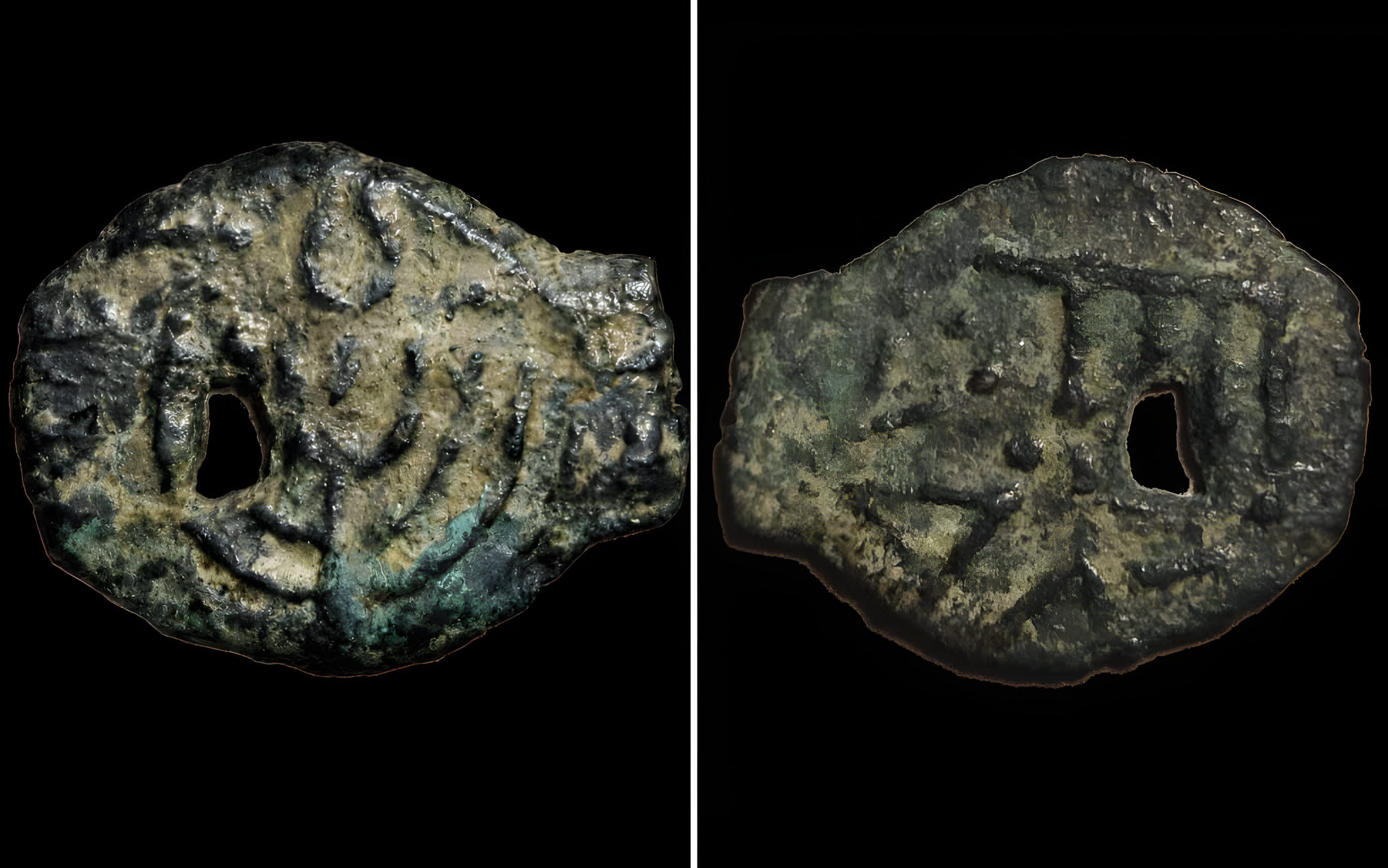
미국과 이스라엘 고대유물청(IAA) 합동 조사 끝에 2026년 5월 12일, 성전 메노라와 진설병 상이 새겨진 2,000년 된 희귀 동전이 이스라엘에 반환되었다. 사진 제공: 에이탄 클라인 / 이스라엘 고대유물청

두 번째 동전은 아슈켈론의 더 넓은 세계를 보여준다.

두 번째로 반환된 동전은 더욱 오래된 것이다.

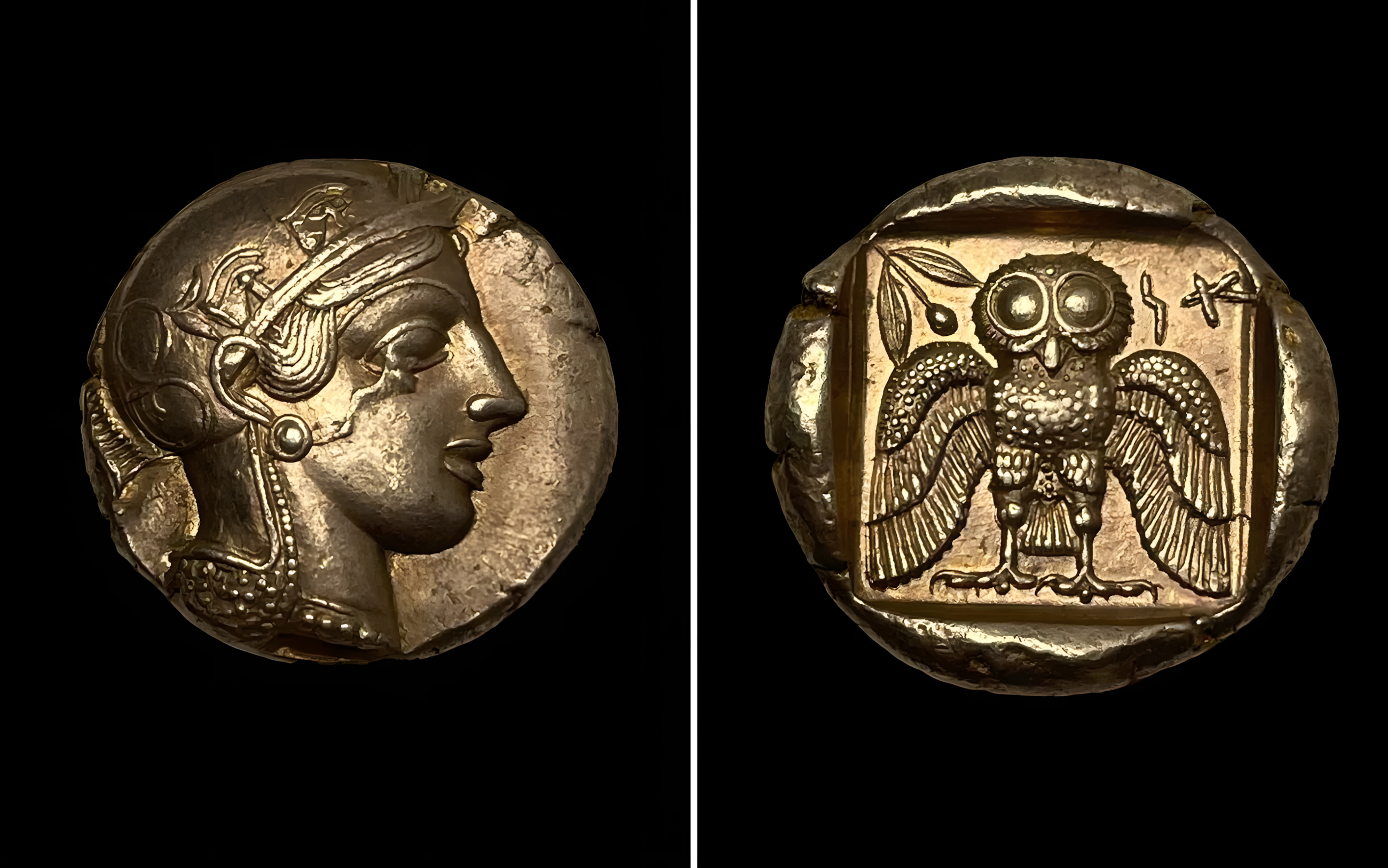
페르시아 시대 은화인 테트라드라크마로, 2,500년이 넘는 역사를 지니며, 고대 아스칼론(현대 아슈켈론)에서 주조되었을 가능성이 높다.

이와 동일한 유형의 동전은 단 하나만 더 존재하며, 현재 이스라엘 박물관에 소장되어 있다.
A rare 2,000-year-old coin showing the Temple menorah and showbread table was returned to Israel on May 12, 2026, after a joint U.S.-IAA investigation. Credit: Eitan Klein / Israel Antiquities Authority
The second coin points to Ashkelon’s wider world

The second returned coin is older still. It is a silver tetradrachm from the Persian period, more than 2,500 years old, most likely minted in ancient Ascalon, modern Ashkelon. Only one other known example of this exact type exists, and that coin is held in the Israel Museum’s collection.


Its design imitates the famous Athenian tetradrachm, one of the dominant currencies of the eastern Mediterranean. One side shows the helmeted head of Athena. The other shows an owl, the symbol associated with the goddess and with Athens. Beside the owl appear the Phoenician letters aleph and nun, which are understood by many scholars as an abbreviation for Ascalon.

The coin reflects Ashkelon’s place in a commercial Mediterranean world where Phoenician cities, Greek imagery, Persian imperial power, and local identities overlapped. Even if the coin was not necessarily struck inside the city itself, its association with Ashkelon points to a coastal economy tied to long-distance trade and widely recognized monetary standards.


A rare coin returns with part of its story missing
The return of the coins also highlights a larger problem in archaeology: once artifacts are looted, their scientific value is damaged. A coin found in a controlled excavation can be tied to a layer, a building, a hoard, or a moment of use. A coin taken from the ground illegally becomes a beautiful object with much of its context stripped away.

That loss is especially serious in cases like these. The menorah coin can illuminate political messaging in the last Hasmonean years. The Ashkelon tetradrachm can help scholars study early coinage, trade, and local minting traditions in the southern Levant. But without secure archaeological contexts, researchers are forced to reconstruct part of the story from style, inscriptions, die links, and market history.

이 동전 디자인은 동부 지중해에서 널리 사용된 아테네 테트라드라크마를 모방했다.

한쪽 면에는 투구를 쓴 아테나 여신 얼굴이, 다른 한쪽 면에는 아테나 여신과 아테네를 상징하는 부엉이가 새겨졌다.

부엉이 옆에는 페니키아 문자 알레프와 눈(nun)이 있는데, 많은 학자는 이를 아스칼론(Ascalon)의 약자로 해석한다.

이 동전은 페니키아 도시, 그리스적 이미지, 페르시아 제국의 영향력, 그리고 지역적 정체성이 공존한 지중해 상업 세계에서 아슈켈론이 차지한 위치를 보여준다.

비록 이 동전이 반드시 도시 내에서 주조된 것은 아닐지라도, 아슈켈론과의 연관성은 장거리 무역과 널리 통용되는 화폐 기준에 기반한 연안 경제를 시사한다.

희귀 동전의 귀환은 그 이야기 일부를 잃어버린 채

이 동전의 귀환은 고고학에서 더 큰 문제점을 부각한다.

유물이 약탈당하면 그 과학적 가치가 손상된다.

통제된 발굴에서 발견된 동전은 특정 지층, 건물, 매장물, 또는 사용 시기와 연결될 수 있다.

땅에서 불법적으로 파낸 동전은 아름다운 물건으로 재탄생하지만, 그 안에 담긴 맥락은 상당 부분 사라진다.

이러한 맥락의 손실은 특히 이 사건과 같은 경우에 더욱 심각하다. 

메노라 동전은 하스몬 왕조 말기의 정치적 메시지를 밝혀줄 수 있다. 

아슈켈론 테트라드라크마는 학자들이 레반트 남부 지역의 초기 화폐, 무역, 그리고 지역 주조 전통을 연구하는 데 도움을 줄 수 있다. 

그러나 확실한 고고학적 맥락이 확보되지 않으면 연구자들은 양식, 명문, 주형의 연관성, 그리고 시장 이력 등을 통해 이야기의 일부를 재구성할 수밖에 없다.

미국과 이스라엘 관계자들은 이번 작전을 문화유산 복원의 모범 사례로 평가했다. 

맨해튼 지방검찰청 유물 밀매 단속반장인 매튜 보그다노스 대령은 이번 사건이 법 집행 기관 간 협력의 중요성을 보여준다고 말했다. 

이스라엘 고고학청(IAA) 관계자들 또한 불법 유물 거래가 약탈을 부추기고 고고학적 유산을 파괴하고 있다고 강조했다.

이스라엘에 이번 사건에서 가장 중요한 것은 오히려 작은 동전이다.

청동 프루타는 귀금속으로 만든 것이 아니었다.

그것은 엘리트 계층의 사치품도 아니었다.

하지만 성전 메노라 이미지가 새겨진 이 동전은 단순한 재질 이상의 가치를 지닌다.

몰락해가는 왕조의 정치적 위기 속에서 주조된 이 동전에는 유대교에서 가장 오래도록 기억될 상징 중 하나가 담겼다.

2천 년이 넘는 세월이 흐른 지금, 그 메시지는 시장과 밀수업자, 그리고 경매장을 모두 거쳐 살아남았다.

이스라엘 고대유물관리국(IAA)
U.S. and Israeli officials described the operation as a model for cultural heritage recovery. Col. Matthew Bogdanos, head of the Manhattan District Attorney’s Antiquities Trafficking Unit, said the case showed the importance of cooperation between enforcement agencies. IAA officials also stressed that the illicit antiquities trade continues to fuel looting and destroy archaeological heritage.

For Israel, the most powerful object in the case is the smaller one. The bronze prutah was not made of precious metal. It was not an elite luxury item. Yet its image of the Temple menorah turns it into something far more valuable than its material. It is a coin from a collapsing dynasty, struck in a moment of political crisis, carrying one of Judaism’s most enduring symbols.


More than two millennia later, that message has survived the market, the smugglers, and the auction room.

Israel Antiquities Authority (IAA)

Cover Image Credit: Eitan Klein/Israel Antiquities Authority via Facebook

반응형