
Royal Court Musical Instrument and Administrative Wooden Tablets from Baekje’s Sabi Period Unearthed at the Gwanbuk-ri Site in Buyeo
- Presentation of Findings Return after 1,500 Years: Musical Instrument and Administrative Documents of Sabi-Baekje (Feb. 5, 2026, 10:45)
The Buyeo National Research Institute of Cultural Heritage under the National Research Institute of Cultural Heritage of the Korea Heritage Service (Director: Hwang In-ho), will hold a research findings briefing titled Return after 1,500 years: Musical Instrument and Administrative Documents of Sabi-Baekje at 10:45 a.m. on February 5 at the institute, in order to share the results of the excavation at the Gwanbuk-ri Site in Buyeo (2024-2025), which is currently being conducted in collaboration with Buyeo-gun (Buyeo County).
In this 16th excavation session, a total of 329 wooden tablets were unearthed, including scraping debris (sakseol), along with a bamboo wind instrument played transversely (hoengjeok, 橫笛). The wooden tablets constitute the largest assemblage ever recovered from a single site in Korea and are regarded as the earliest known materials from Baekje’s Sabi period.
* Scraping debris: Wood shavings produced when the surface of a wooden tablet was scraped to delete or revise written characters
The hoengjeok was unearthed from a pit near a 7th-century building site, believed to have been part of the Baekje jodang precinct. Although partially missing, comparative research with examples from China and Japan indicates that the instrument can be restored as one similar to the sogeum (小笒) used today.
This marks the first identification of the physical form of a Baekje hoengjeok as well as the first discovery of an extant wind instrument from the Three Kingdoms period (7th Century).
* Jodang (朝堂): A political and symbolic space where the king and his officials discussed state affairs and conducted court audiences and ceremonies

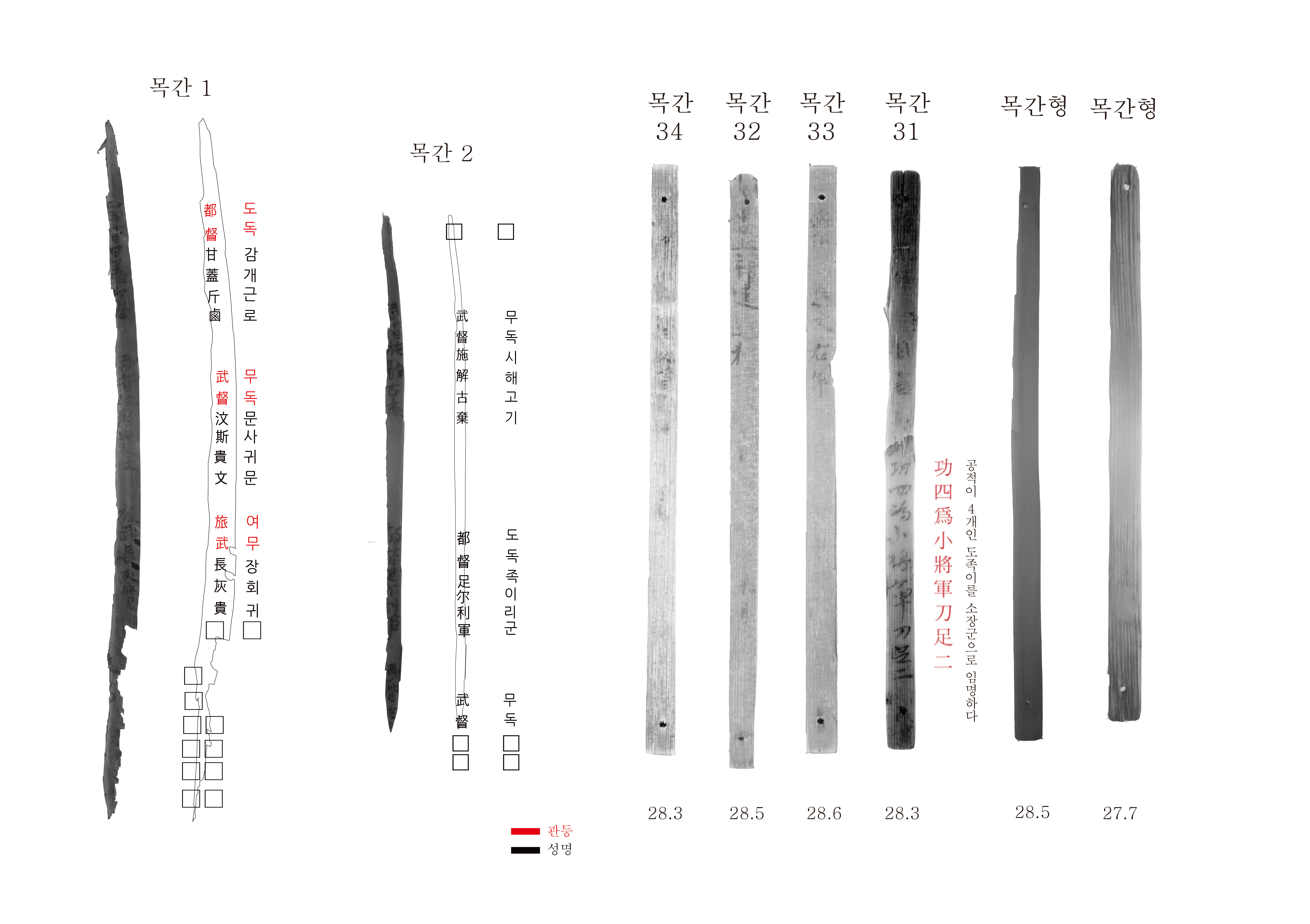
The wooden tablets were recovered in large quantities from a waterway dating to the early phase of the Sabi capital relocation, and tablets bearing sexagenary cycle (ganji, 干支) year designations make it possible to determine their production dates more precisely.
The Gyeongsin year (庚申年) corresponds to 540, and the Gyehae year (癸亥年) to 543. These tablets therefore constitute evidence reflecting circumstances immediately following Baekje’s relocation of its capital in 538 from Gongju (Ungjin) to Buyeo (Sabi).
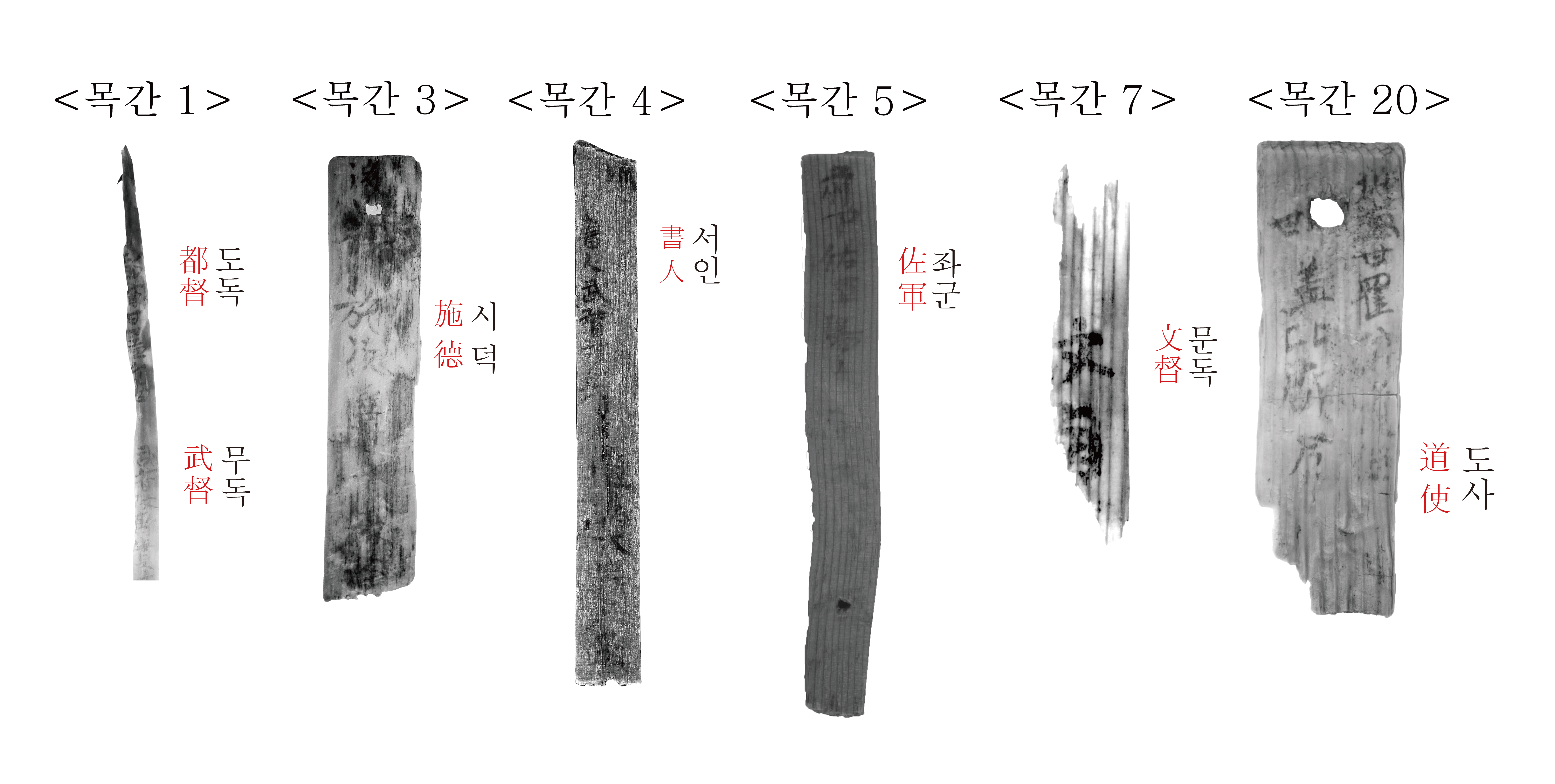
In addition, numerous wooden tablets, including personnel records (state administrative documents), ledger tablets, and tablets bearing official ranks and posts, as well as substantial amounts of scraping debris, were recovered, indicating that the area was associated with the 22 Bureaus (busa), Baekje’s central administrative offices.
For example, among Korea’s first-ever discovery of bound wooden tablets, a tablet inscribed with “功四爲小將軍刀足二” (gongsawi sojanggun dojogi) is a personnel-related document meaning “to appoint dojogi, who has four merits, as a sojanggun.”
* Bound wooden tablets: Wooden tablets bound together with cords like a mat, intended for the management and preservation


Among the scraping debris, which accounts of the majority of the excavated materials, were ledger tablets related to state fiscal administration, including records of monthly food rations, in addition to personnel-related documents. Numerous wooden tablets were also recovered that shed light on the five bu (部), the central administrative districts of the Sabi capital, and on the process of resturcturing the local administrative systems of bang (方)-gun (郡)-seong (城).
Tablets recording the capital’s administrative units, the five bu, Sangbu, Jeonbu, Jungbu, Habu, and Hubu (上·前·中·下·後部), as well as newly confirmed place names such as Ungjin and Haseo-gun and Nara and Yobi-seong, offer a glimpse into the state governance system of the period.
Meanwhile, wooden tablets inscribed with terms such as Ipdong (立冬), Insimcho (人心草), Hyeongokgae (玄曲愷), and the Character 畑 (jeon), previously regarded as a Japanese-made kanji, demonstrate Baekje’s advanced culture and its active external exchanges across East Asia.
The Gwanbuk-ri Site in Buyeo has thus provided tangible evidence of administrative documentation and musical culture at the Sabi-period Baekje royal palace, representing a significant achievement that helps reconstruct Baekje’s governance and soundscape from around 1,500 years ago.


Attachment: Photos. End.
'NEWS & THESIS' 카테고리의 다른 글
| 귀신도 울고 갈 "소장군 도족이" (0) | 2026.02.05 |
|---|---|
| 똥 싸다 빠뜨린 백제 피리? 관북리 횡적, 피리 맞나? (0) | 2026.02.05 |
| 도판으로 만나는 부여 관북리 백제 목간 (0) | 2026.02.05 |
| 부여 관북리서 백제 목간 쏟아져, 악기도 출현 (0) | 2026.02.05 |
| 고대 유전체 연구가 인도유럽어족 기원에 대한 최종적인 해답? (0) | 2026.02.05 |


댓글